
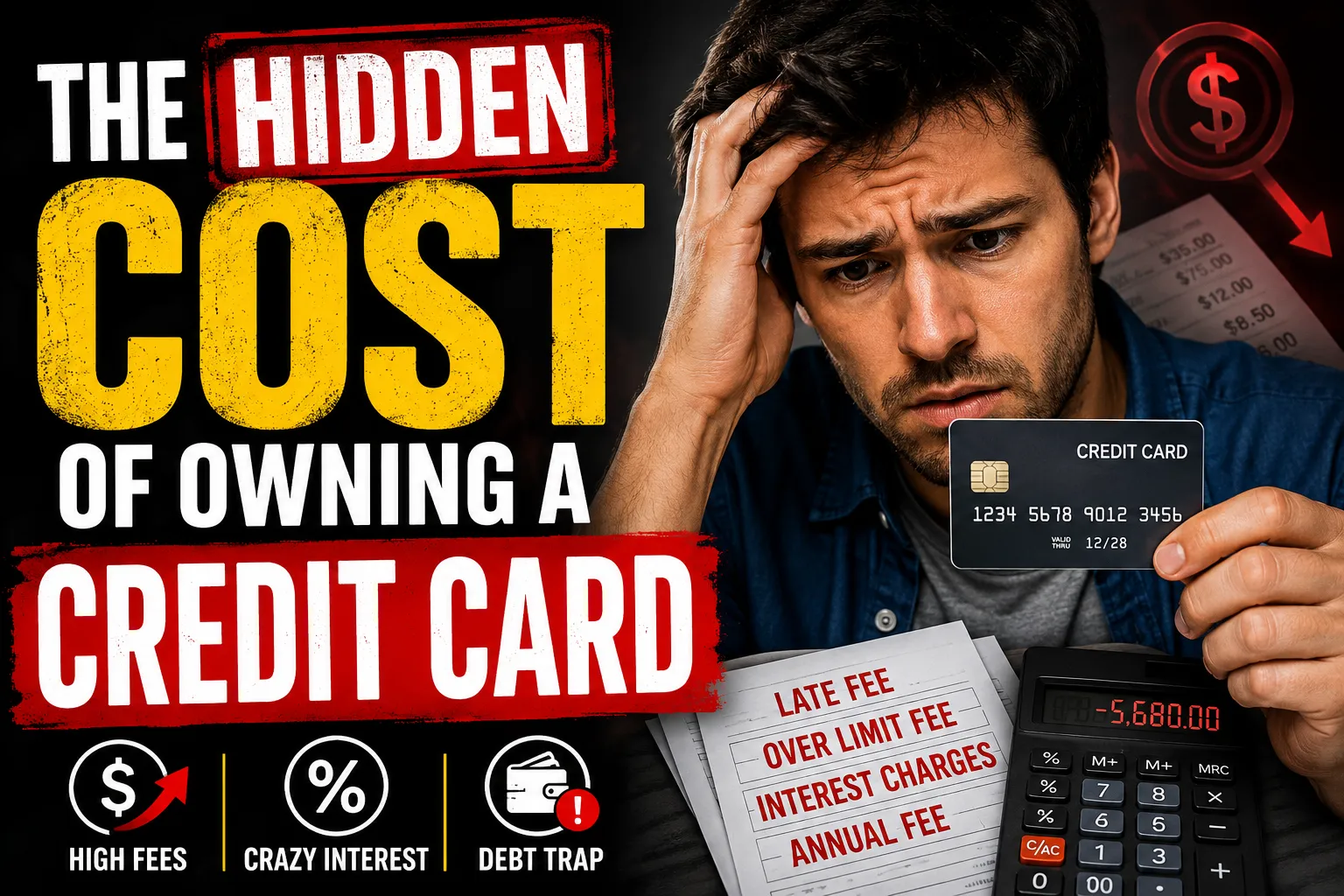
Credit cards are everywhere. From online shopping and travel bookings to food delivery and monthly subscriptions, they have become a normal part of modern life. Most people see credit cards as a convenient financial tool, and honestly, they can be. They help build credit history, offer cashback rewards, and make emergency spending easier. But what many people fail to notice are the hidden costs attached to owning and using a credit card.
These costs are not always obvious in the beginning. In fact, banks and credit card companies are experts at making credit cards look attractive. Fancy reward points, airport lounge access, welcome bonuses, and “buy now, pay later” offers make spending feel harmless. The problem starts when small financial habits slowly turn into long-term debt and unexpected expenses.
Understanding these hidden costs can save you thousands of dollars over time.
Interest Charges Can Quietly Destroy Your Finances
One of the biggest hidden costs of owning a credit card is interest. Most people already know credit cards charge interest, but they underestimate how quickly it grows.
When you fail to pay your full balance by the due date, the remaining amount starts accumulating interest every single month. In the USA and many Tier-1 countries, average credit card interest rates are extremely high compared to personal loans or mortgages.
A small unpaid balance can become a serious financial burden within months.
For example, if someone spends $3,000 on a credit card and only makes minimum payments, they may end up paying hundreds or even thousands of dollars extra in interest alone. This is how many people unknowingly stay trapped in debt for years.
Credit card companies love minimum payments because they keep users paying interest longer.
Reward Programs Often Encourage Overspending
Cashback and reward points sound amazing on paper. Getting points for travel, shopping, or dining feels like free money. But psychologically, reward systems often push people to spend more than they normally would.
Many cardholders buy unnecessary products simply to earn points or unlock bonus rewards. Some even justify expensive purchases by saying things like, “At least I’m getting cashback.”
In reality, spending $500 to earn $10 back is still spending $490.
This is one of the smartest tricks used in the credit card industry. Rewards are designed to increase your spending habits while making you feel financially smart.
Annual Fees Add Up Faster Than You Think
Premium credit cards usually come with annual fees. Some cards charge $95 per year, while luxury travel cards can cost several hundred dollars annually.
At first, these fees may seem reasonable because of the benefits included. However, most people never fully use all the perks they are paying for.
Airport lounge access sounds exciting until you realize you travel only once or twice a year. Travel credits often expire unused. Subscription benefits go unnoticed. Over time, the annual fee becomes another unnecessary expense quietly draining your money.
If the rewards and benefits do not exceed the yearly fee, the card is probably costing you more than it is helping you.
Late Fees Punish Small Mistakes
Missing a payment deadline by even one day can trigger expensive late fees. Some banks also increase your interest rate after late payments, making future debt even harder to manage.
Many people miss payments because of simple reasons like forgetting the due date, changing bank accounts, or unexpected financial emergencies.
The dangerous part is that one late payment can also hurt your credit score.
A lower credit score can affect your future ability to get loans, rent apartments, or even qualify for better insurance rates in some countries.
Credit Cards Make Spending Feel Less Painful
Studies have shown that people spend more money when using credit cards compared to cash.
Why?
Because swiping a card or tapping a phone removes the emotional discomfort of physically handing over money. Spending becomes digital and emotionally disconnected.
This creates a dangerous habit where people stop tracking their real expenses.
Small purchases like coffee, online subscriptions, food delivery, and impulse shopping may not feel important individually, but together they create major financial leakage every month.
The hidden cost here is not just money. It is the loss of financial awareness.
Minimum Payments Create a Debt Trap
Minimum payments are one of the most misunderstood parts of credit cards.
Banks advertise them as a convenient option during financial stress. But paying only the minimum amount means the majority of your balance continues collecting interest.
Many people believe they are managing debt responsibly because they never completely miss payments. Unfortunately, minimum payments can keep debt alive for years.
A person paying the minimum on multiple cards may stay financially stuck despite earning a decent income.
This cycle creates stress, anxiety, and long-term financial pressure that affects daily life more than people realize.
Hidden Charges Most Users Never Notice
Credit cards often include additional fees hidden inside lengthy terms and conditions.
These can include:
Foreign transaction fees
Cash advance fees
Balance transfer fees
Over-limit fees
Card replacement charges
Currency conversion costs
Most users never read the full agreement carefully. As a result, they get surprised when unexpected charges suddenly appear on their statement.
Even cash advances can become extremely expensive because interest usually starts immediately without any grace period.
Your Credit Score Can Suffer Quickly
Owning a credit card means constantly managing your credit utilization ratio, payment history, and account age.
Using too much of your credit limit can lower your credit score even if you make payments on time. Applying for multiple cards in a short period can also negatively affect your score.
Many users unknowingly damage their financial profile simply by poor credit card management.
A bad credit score can lead to:
Higher loan interest rates
Mortgage rejection
Difficulty renting homes
Higher insurance premiums
Lower approval chances for future credit
The long-term financial damage can be massive.
Emotional Stress Is a Hidden Cost Too
Credit card debt does not only affect bank accounts. It affects mental health as well.
Constant notifications, rising balances, collection calls, and monthly bills create emotional stress that slowly builds over time.
Many people lose sleep worrying about debt. Others avoid checking their bank accounts because they feel overwhelmed.
Financial stress can damage relationships, productivity, and overall quality of life.
This emotional burden is one of the most overlooked hidden costs of credit card ownership.
Credit Cards Are Not Evil — But They Require Discipline
Credit cards themselves are not the problem. Poor financial habits are.
When used responsibly, credit cards can provide convenience, fraud protection, travel benefits, and credit-building opportunities. The key difference is discipline.
Smart credit card users usually follow simple rules:
They pay the full balance every month
They avoid unnecessary purchases
They track spending carefully
They never rely on minimum payments
They choose cards that match their lifestyle
The real danger begins when people treat credit cards like free money instead of borrowed money.
Final Thoughts
The hidden cost of owning a credit card is much bigger than annual fees or interest charges. It includes overspending habits, financial stress, damaged credit scores, and years of unnecessary debt.
Credit cards can either become a useful financial tool or a silent financial trap. The outcome depends entirely on how they are used.
Before applying for another shiny rewards card, ask yourself one important question:
Are you controlling the credit card, or is the credit card controlling your financial life?