Starting a business is exciting until the finances begin getting messy. Most startup founders focus heavily on sales, marketing, product development, and hiring, but ignore accounting in the early stage. That usually becomes a huge mistake later. Missed invoices, tax issues, cash flow confusion, and incorrect expense tracking can quickly damage a growing company.
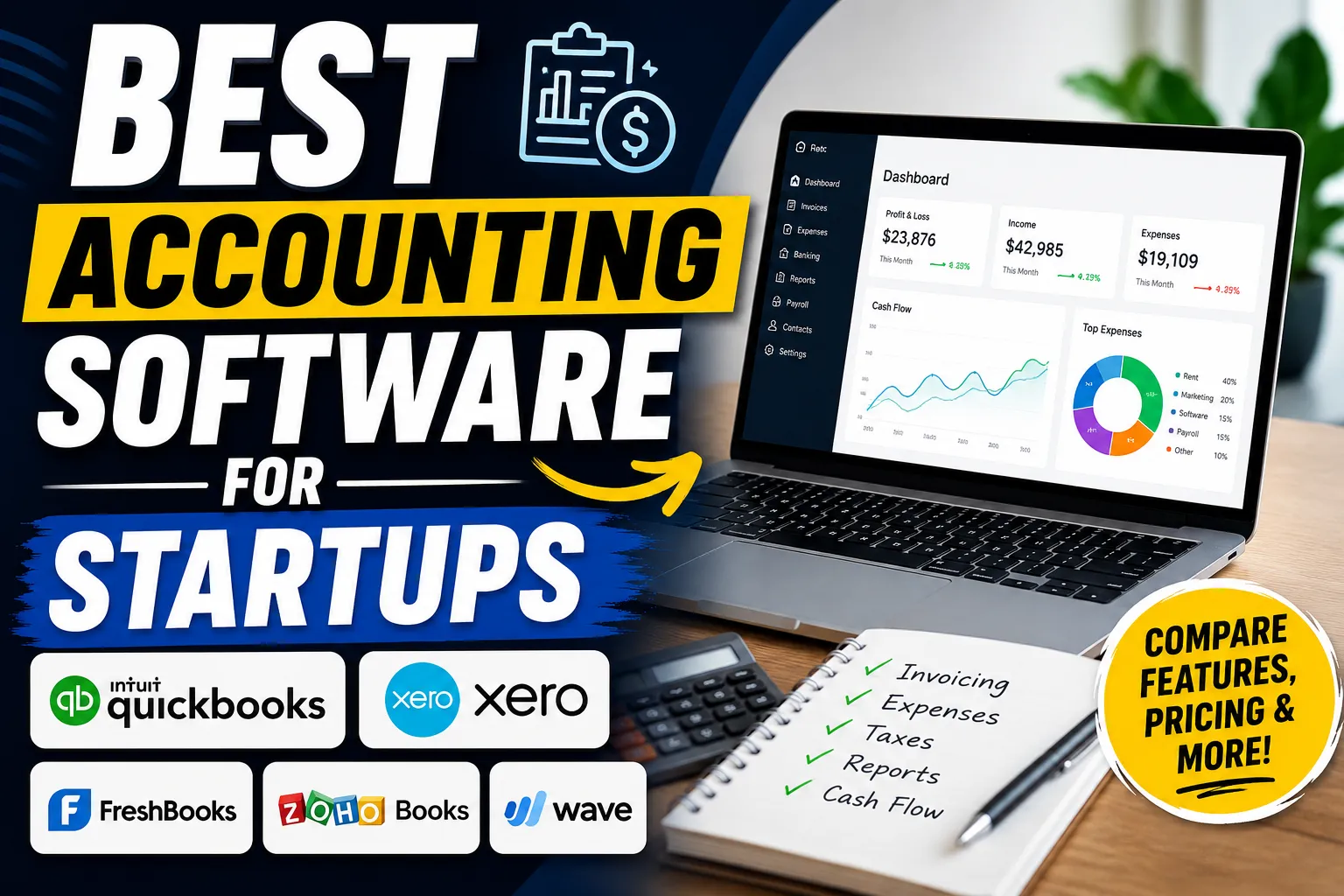
The good news is that modern accounting software has made financial management much easier for startups. Today’s tools can automate invoicing, track expenses, manage payroll, calculate taxes, generate financial reports, and even help with forecasting. The challenge is choosing the right software because every startup has different needs and budgets.
Some founders need a simple tool for invoicing and bookkeeping, while others need advanced automation, inventory tracking, or integrations with payment platforms and CRMs. After working with multiple startup finance systems and comparing features, pricing, ease of use, and scalability, a few accounting platforms clearly stand out above the rest.
Why Startups Need Accounting Software Early
Many startups try managing accounts manually using spreadsheets during the beginning phase. It may seem cheaper initially, but it creates problems as transactions increase. Manual accounting wastes time and increases the chances of expensive errors.
Good accounting software helps startups stay organized from day one. It gives founders clear visibility into revenue, expenses, profits, taxes, and overall business health. Investors also expect startups to maintain proper financial records before funding discussions.
Another major benefit is automation. Instead of manually tracking invoices and payments, software can automatically sync bank transactions, send reminders, and generate reports instantly. This allows founders to focus more on scaling the business instead of drowning in spreadsheets.
QuickBooks Online Remains the Most Reliable Choice
QuickBooks Online continues to dominate the startup accounting market for a reason. It offers one of the best combinations of simplicity, automation, integrations, and scalability.
For most startups, QuickBooks works perfectly because it handles nearly everything in one dashboard. Founders can create invoices, track expenses, connect business bank accounts, manage taxes, and monitor cash flow without needing advanced accounting knowledge.
One of the strongest features is its ecosystem. Thousands of third-party apps integrate directly with QuickBooks including Stripe, PayPal, Shopify, Slack, and CRM platforms. This becomes extremely valuable as startups grow.
The reporting system is another major advantage. Startups can quickly generate profit and loss statements, balance sheets, tax summaries, and expense reports within seconds.
QuickBooks is especially ideal for SaaS startups, eCommerce businesses, agencies, freelancers, and service-based companies that want an all-in-one accounting solution.
Xero Is Perfect for Fast Growing Teams
Xero has become a favorite among startups that want a clean interface and powerful collaboration features.
Unlike many traditional accounting tools, Xero feels modern and beginner friendly. The dashboard is visually cleaner, navigation is simple, and multi-user access works extremely well for remote teams.
One reason many startups prefer Xero is unlimited user access. Some accounting platforms charge extra for adding team members, but Xero allows startups to collaborate without constantly upgrading plans.
The software also offers excellent automation for bank reconciliation, invoice reminders, recurring billing, and expense tracking. For startups with international operations, Xero supports multiple currencies which becomes useful for global payments and remote hiring.
Another major advantage is integration support. It connects smoothly with tools like HubSpot, Stripe, Gusto, Wise, and Shopify.
FreshBooks Is Great for Small Service Startups
FreshBooks is ideal for freelancers, consultants, agencies, and small service-based startups.
What makes FreshBooks different is its simplicity. The platform is designed for non-accountants. Everything feels straightforward, from invoice creation to time tracking and payment collection.
Startups that bill clients hourly will especially love FreshBooks because of its built-in time tracking and project billing features. It makes invoicing clients extremely fast and professional.
The software also includes automated payment reminders, recurring invoices, proposal generation, and mobile expense scanning. These small features save a surprising amount of time for early-stage founders.
While FreshBooks may not have the deepest accounting features compared to QuickBooks or Xero, it is one of the easiest platforms for startups that mainly need invoicing and expense management.
Zoho Books Offers Incredible Value for Money
Zoho Books is one of the most underrated accounting tools for startups.
For startups trying to reduce software expenses, Zoho Books delivers excellent features at a lower price compared to many competitors. Despite being affordable, it includes invoicing, inventory management, bank reconciliation, automation workflows, tax compliance, and reporting.
The biggest strength of Zoho Books is its ecosystem. Startups already using Zoho CRM, Zoho Inventory, or Zoho Payroll will benefit from seamless integration across all business operations.
The automation tools are surprisingly powerful for the pricing. Startups can automate reminders, payment follow-ups, recurring invoices, and approval workflows without needing technical expertise.
For budget-conscious startups wanting enterprise-like features without enterprise pricing, Zoho Books is extremely hard to beat.
Wave Is the Best Free Accounting Software
Wave is one of the best free accounting tools available for startups.
Many new founders simply cannot afford expensive software during the early phase. Wave solves that problem by offering free accounting, invoicing, and receipt scanning features.
The interface is simple, clean, and beginner friendly. Startups can track expenses, create professional invoices, and manage cash flow without paying monthly fees.
Wave works best for freelancers, solo founders, creators, and very small startups with limited accounting complexity. However, as the business grows, many companies eventually migrate to more advanced platforms like QuickBooks or Xero.
Still, for startups operating on a tight budget, Wave provides incredible value.
Important Features Every Startup Should Look For
Choosing accounting software should never be based only on pricing. Startups must evaluate how the platform will support future growth.
Automation should be a top priority. Features like recurring invoices, automatic expense categorization, and bank syncing save countless hours.
Integration support is equally important. Modern startups use multiple tools including payment gateways, CRMs, payroll systems, and eCommerce platforms. Accounting software should connect smoothly with existing workflows.
Scalability also matters. Some software works great for small teams but becomes expensive or restrictive later. Startups should think long term before committing.
Reporting capabilities are another crucial factor. Founders need accurate financial data for investor meetings, tax filing, forecasting, and strategic decisions.
Finally, user experience matters more than most people realize. If software feels complicated, teams avoid using it properly. Simple systems often produce better long-term financial discipline.
Which Accounting Software Is Best Overall?
For most startups, QuickBooks Online remains the safest overall choice because it balances usability, features, integrations, and scalability better than competitors.
However, the best option depends on the startup type.
Service-based startups may prefer FreshBooks for its simplicity and invoicing tools.
Remote teams and global startups often choose Xero because of collaboration features and international support.
Budget-focused founders usually love Zoho Books.
Very early-stage startups with limited funding can start with Wave completely free.
The smartest approach is choosing software that not only solves current problems but also supports future business growth. Switching accounting systems later can become painful, so making the right decision early saves both time and money.
In today’s startup ecosystem, financial clarity is not optional anymore. The right accounting software can improve cash flow visibility, reduce stress, simplify taxes, and help founders make smarter business decisions with confidence.